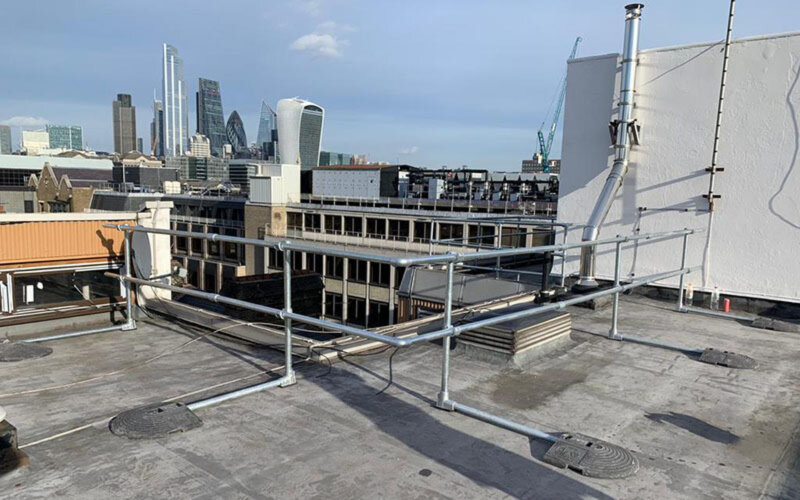
Guard Rail for Flat Roofs

Guard rails for flat roofs are an essential safety feature for buildings where workers regularly access rooftop equipment, plant system, or maintenance areas. Installing a roof guardrail or rooftop railing system helps prevent falls while creating clearly defined safe access zones across the roof surface.

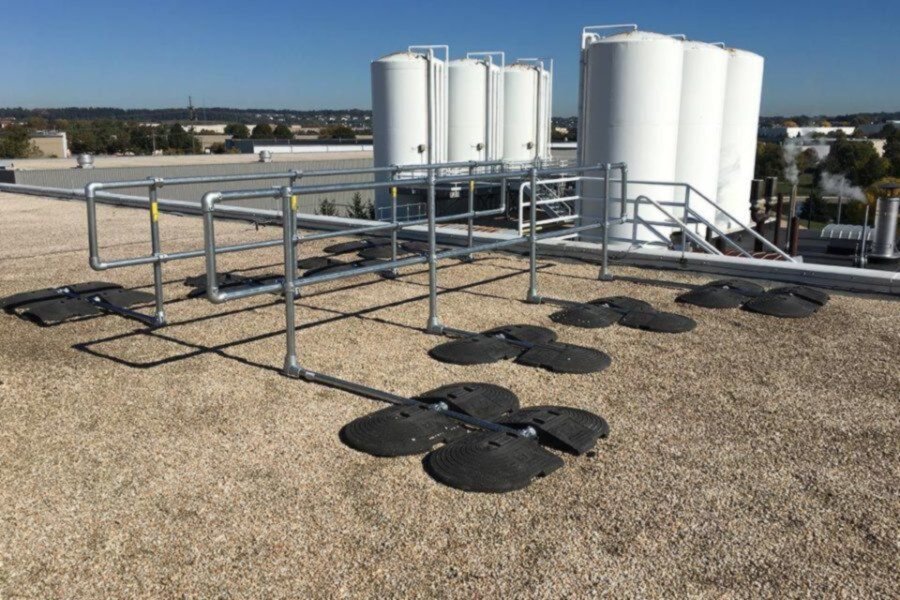
Freestanding guardrail systems, such as Kee Guard rooftop railing, are particularly suited to flat roofs because they provide reliable fall protection without penetrating the roof structure. These free-standing roof guardrail systems use weighted bases to create a stable safety barrier, protecting workers while preserving the integrity of the roof membrane.

roof railing for flat roofs

Roof Edge Protection for Flat Roofs

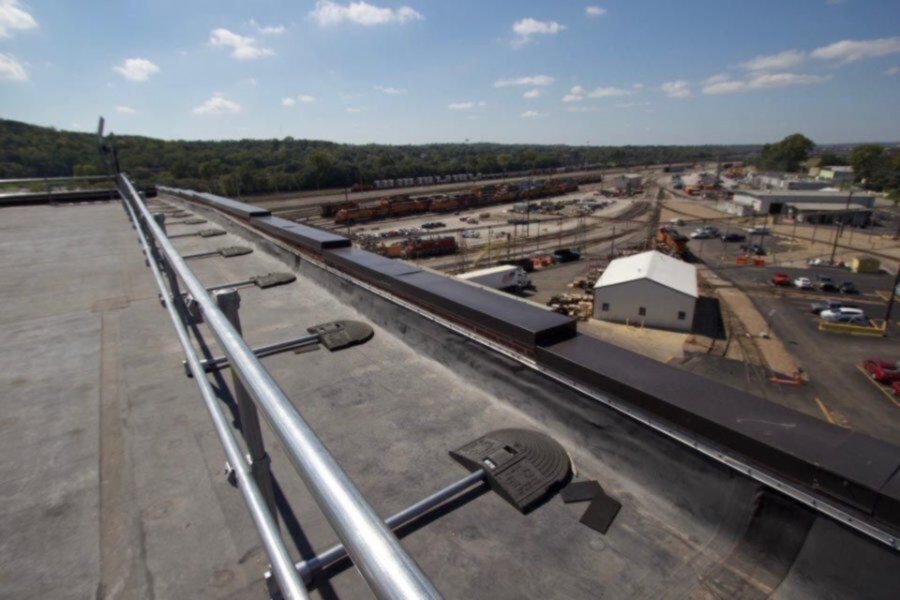
Guard rails for flat roofs provide essential edge protection for workers carrying out maintenance, inspections, or equipment servicing on rooftops. Where roof penetration is undesirable or prohibited, freestanding guardrail systems offer a safe practical solution.

Kee Guard is a modular freestanding roof guardrail system designed specifically for flat and low-slope roofs. Instead of fixing directly into the roof structure, the system uses engineered counterweights to create a stable rooftop railing that protects workers without damaging the roof membrane.

This non-penetrating approach makes Kee Guard an ideal roof guardrail solution for commercial and industrial buildings, particularly where maintaining the integrity of the roof structure is critical. Installation is quick, disruption is minimal, and existing roof warranties can remain intact.

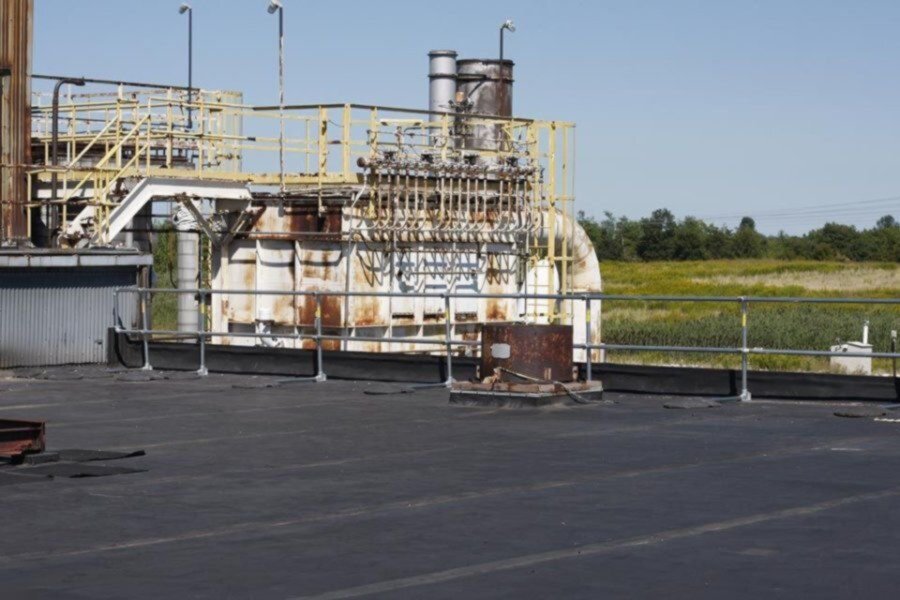
For facilities managers responsible for maintaining rooftop plant, solar installation, or HVAC equipment, freestanding handrail systems provide reliable, permanent fall protection while allowing safe access across the roof.

What is Freestanding Roof Edge Protection?

Freestanding roof guardrails create a physical safety barrier along roof edges without requiring mechanical attachment to the building structure. Instead of drilling into the roof, the system sits directly on the roof surface and is stabilised using weighted bases.

This design allows the guardrail to distribute loads safely while preserving the waterproofing system beneath it. As a result, freestanding guardrail systems are widely used on flat roofs, particularly where roof penetrations could cause leaks or invalidate warranties.

They are commonly installed on:

  • Commercial and industrial buildings
  • Warehouses and distribution centres
  • Office buildings and retail facilities
  • Roofs with membrane or single-ply waterproofing
flat roof edge protection
roof handrails for flat roofs

How a Freestanding Roof Guardrail Works

A free standing roof guardrail system combines modular guardrail posts with engineered counterweight bases that sit directly on the roof surface. These bases provide the stability needed to resist user loads and wind forces while maintaining a secure barrier at the roof edge.

Because the system is modular, it can be configured around rooftop layouts and obstacles, including plant equipment, access routes, and service zones. This flexibility allows organisations to create safe working areas across the roof without altering the building structure.

Freestanding vs. Fixed Roof Guardrails

Both freestanding and fixed guardrails provide effective edge protection and HSE compliance, but they suit different building conditions.

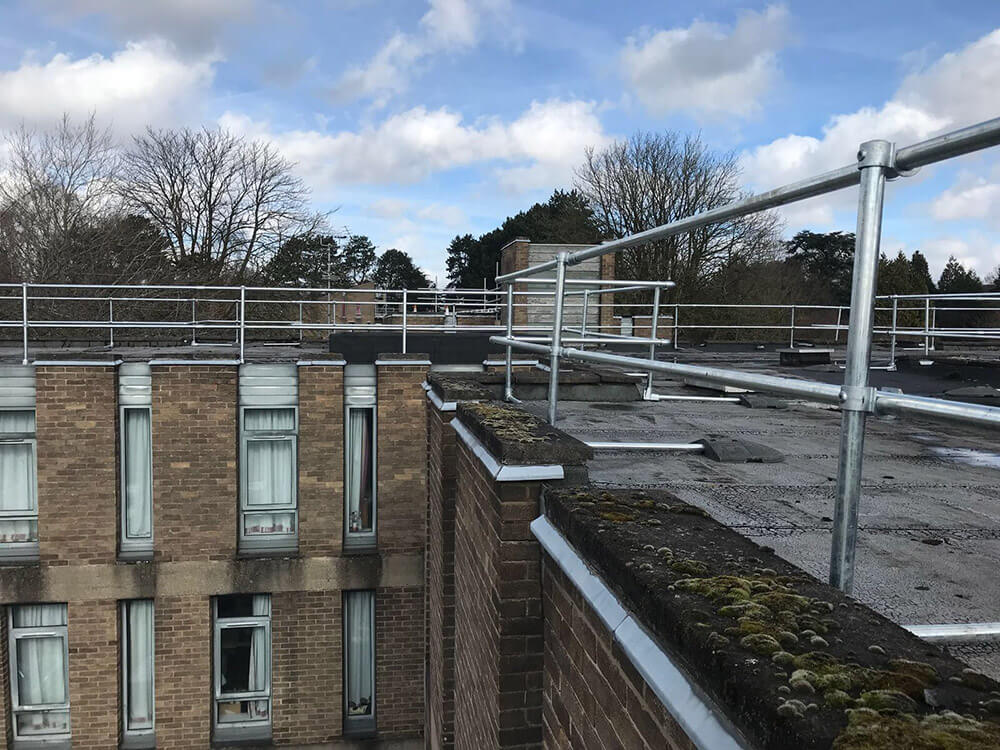
Freestanding systems sit directly on the roof and rely on counterweights for stability. They are typically chosen when roof penetration must be avoided, particularly on existing buildings or roofs with waterproof membranes.

Fixed guardrails are mechanically attached to the building structure, often through parapet walls or structural roof elements. While this creates a rigid barrier, it requires penetration into the building fabric.

For many flat roof applications, freestanding rooftop railing systems provide the most practical solution, combining safety with simple installation.

keeguard on a flat roof
roof edge protection railing

Why Choose a Freestanding Roof Guardrail?

Freestanding roof guardrails are widely used because they provide reliable fall protection while avoiding intrusive installation.

Key advantages include:

  • No roof penetration required
  • Fast installation with minimal disruption
  • Compatible with most flat roof types
  • Modular design for flexible layouts
  • Permanent collective fall protection

Because the system protects workers without requiring harnesses or PPE, guardrails provide a passive fall protection solution that improves safety for anyone accessing the roof.

Maintenance and Recertification

Like all rooftop safety systems, guardrails should be inspected periodically to ensure they remain safe and secure.

Routine inspections typically include checking the guardrail structure, verifying the base weights remain correctly positioned, and confirming there is no damage or corrosion. These checks can often be incorporated into a wider rooftop safety inspection programme.

Regular inspections help ensure your roof guardrail system continues to provide reliable protection for workers accessing the roof.

flat roof railing


safety-docs

Designed and tested to
exceed industry standards

We want you to be safe - we can prove it.

KeeGuard free standing handrail is designed to meet and exceed EN and HSE standards for
low-slope or flat roof types.


Installation examples for
flat & low slope rooftops

Full perimeter protection

Full perimeter protection

Flat roofs typically lack parapet walls, leaving an unprotected edge around the entire perimeter.
Safe working area

Safe working area

Low slope and flat roofs house various units such as air con and other equipment. The location of these units can pose a risk by being near the edge.
Safe walking surface

Safe walking surface

Walking to the work area on a flat roof can bring someone close to the edge. Anytime someone is within 3m from a fall hazard they are at risk.
Skylight protection

Skylight protection

Skylights are common on flat roofs and prove to be a death trap for workers. Cleaning and maintenance can be extremely dangerous without suitable protection measures in place.
Heating, ventilation & air con

Heating, ventilation & air con

Many units are found on flat roofs near an edge. This forces maintenance workers to do their work next to a fall hazard.
Refrigeration pipework

Refrigeration pipework

Most refrigeration pipes require regular inspections. Unfortunately, most refrigeration pipes are also installed near a roof edge.
Solar

Solar

Flat roofs are a great surface for solar panel installations. With that comes regular inspections and maintenance placing people at risk for a fall.

What our customers have to say
about our free standing roof guardrail system

Frequently asked questions


Do I need guardrails on a flat roof?

If you have workers regularly access a flat roof for maintenance, inspections, or servicing equipment, edge protection is typically required under work-at-height safety regulations. Installing guardrail for flat roofs provides a physical barrier that prevents workers from reaching the roof edge, reducing the risk of falls and helping organisations meet their duty of care.

What is a freestanding roof guardrail system?

A freestanding roof guardrail system is a type of edge protection that sits directly on the roof surface rather than being fixed into the structure. These systems use weighted bases to stabilise the guardrail, creating a secure rooftop railing without drilling into the rood membrane.

This makes freestanding guardrails ideal for flat roofs where roof penetrations must be avoided.

Are freestanding guardrails suitable for all flat roofs?

Freestanding guardrails are suitable for most flat and low-slope roods, particularly those with membrane, bitumen, or single-ply waterproofing systems. Because they do not require roof penetration, they are often preferred for existing buildings where preserving the waterproof layer is essential.

In exposed locations or complex roof layouts, a site assessment may be required to confirm the most appropriate guardrail configuration.

How does a freestanding roof guardrail stay stable?

Freestanding roof guardrails use engineered counterweights positioned at the base of teach guardrail post. These weights provide the stability required to resist user loads and wind forces while keeping the system securely in place.

The design allows the guardrail to distribute loads safely across the roof surface while maintaining a protective barrier at the edge.

When should you choose a freestanding guardrail instead of fixed roof guardrail?

Freestanding guardrails are usually selected when roof penetration is not desirable. This commonly applies when:

  • The roof has a waterproof membrane
  • The building warranty prohibits drilling into the roof
  • The system needs to be installed on an existing building
  • Structural fixing points are limited or unavailable

In these situations, a free standing roof guardrail system provides reliable edge protection without modifying the building structure.

Can rooftop guardrails be installed around plant equipment?

Yes. Freestanding rooftop railing systems are often used to create protected working zones around equipment such as HVAC units, solar installations, and service walkways. The modular design allows guardrails to be configured around obstacles while maintaining safe access routes across the roof.

Do freestanding roof guardrails require maintenance?

Freestanding guardrails require minimal maintenance, but periodic inspections are recommended to ensure the system remains secure and in good condition.

Inspections typically involve checking the guardrail structure, verifying the position of counterweights, and confirming there are no signs of damage or corrosion. Regular inspections help ensure the guardrail continues to provide effective rooftop fall protection.

Are guardrails better than roof lifeline systems?

Guardrails and lifelines serve different purposes. Guardrails provide collective fall prevention, stopping workers from reaching the roof edge. Lifeline systems provide fall arrest, meaning a worker can fall before the system stops them.

For many flat roof applications, guardrails are preferred because they protect all workers without requiring harnesses, training, or specialist PPE.

How quickly can a freestanding roof guardrail be installed?

Freestanding guardrail systems can usually be installed quickly because they do not require drilling into the roof structure. The modular design allows systems to be assembled directly on the roof surface, often with minimal disruption to building operations.

Installation times vary depending on the roof size and layout.

What types of buildings commonly use rooftop guardrails?

Guardrails for flat roofs are widely used across commercial and industrial buildings, including:

  • Warehouses and logistics facilities
  • Manufacturing plants
  • Retail centres
  • Schools, hospitals, and public buildings

Any building with rooftop plant or regular maintenance access can benefit from permanent roof guardrail protection.

Get a KeeGuard quote

Test

Interested in our KeeGuard system? Get in touch and receive a KeeGuard quote in no time.

Shopping Basket

Show Pricing

Option available in footer.